info@turbochargers-shop.com
 Log in

 Complaints

By purchasing a turbocharger at TURBOCHARGERS-SHOP.COM, you can be sure that you have made the right choice. We are an experienced supplier, which is why we guarantee professional service during the complaint process. We will make every effort to ensure that your case proceeds efficiently and successfully.
Due to the specification of the product, which is a turbocharger, and the number of factors affecting its correct operation, the examination of complained-about turbines is carried out by a specialist centre that has authorisation from turbocharger manufacturers. This centre determines whether the product has a factory defect or whether the damage/malfunction resulted from incorrect installation/operation. Each examination is concluded with a technical expert opinion detailing the specific case and including detailed photographs.
How does the complaint process proceed?

1. Contact Us
Before contacting us, prepare your order number and invoice number, and then write to: info@turbochargers-shop.com


2. Submission
We accept your submission. You will receive a complaint form from us or you can download it here. Fill in the form.

3. Collection of the Complained Product
We will arrange a courier* who will collect the turbocharger from you. Remember to secure the product when packing and to include the printed and completed form along with the signed warranty card and a copy of the proof of purchase (invoice).

4. Expert Opinion
The specialist service conducts a turbocharger examination and prepares an expert opinion.

5. Decision
We will issue a decision, which we will inform you about by email. You will receive a complaint protocol prepared on the basis of the expert opinion carried out by the service centre.

Positive Decision

Exchange
You can opt for an exchange of the goods for a new one.

Refund
If you opt for a financial refund, you will receive it to the bank account you specify or to the card used for payment.

Negative Decision

Product Return
If you decide to have the product returned, it will be sent to the address you specify. The cost of delivery is covered by the buyer**.

Repair/Reconditioning
We will propose product reconditioning at a price adequate to the costs we must incur to bring the turbocharger back to life.

Purchase of a New Product with Return of the Complained-about Product
You can opt to buy a new turbocharger with the option of reducing the price by the value of the damaged product. Individual valuation.

Disposal
If you decide on disposal, the product will be destroyed at the service centre in compliance with applicable environmental protection regulations.
*We assume that the Customer is right in filing a complaint, which is why we cover the cost of collecting the complained product ourselves. The condition for free delivery is the collection of the item via the courier commissioned by us.
**In case of a negative decision, the cost of re-delivery is borne by the Buyer.
What to do if the shipment is damaged upon receipt?
If you find that the shipment is damaged upon receipt from the courier, draw up a damage protocol in their presence (every courier carries one). A reliably completed protocol will be the basis for a warranty claim.
Are there additional fees associated with the complaint?
Additional fees may arise in the case of a negative complaint decision (cost of re-delivery, product reconditioning).
Are there additional fees associated with the complaint?
Additional fees may arise in the case of a negative complaint decision (cost of re-delivery, product reconditioning).
Who bears the cost of turbocharger disassembly/re-assembly?
Until the complaint decision is issued, all costs related to the disassembly/assembly of the product are borne by the Buyer. In the case of a positive decision, the Customer may apply for reimbursement of the costs incurred related to the product complaint.
ODR Platform
As a Consumer, you can use out-of-court methods for handling complaints and pursuing claims also through the ODR platform. This platform is intended to facilitate independent, impartial, transparent, effective, quick, and fair out-of-court online resolution of disputes between consumers and traders concerning contractual obligations arising from online sales contracts or contracts for the provision of services concluded between consumers residing in the Union and traders established in the Union.
In accordance with the content of Art. 14 sec. 1-2 of Regulation (EU) No 524/2013 of the European Parliament and of the Council of 21 May 2013, consumers may use the out-of-court dispute resolution path related to a sales contract or a service contract concluded using the Internet.
The European ODR platform is an interactive website through which, as a Consumer, you can submit your complaint. Electronic link to the ODR platform: ec.europa.eu/consumers/odr.
MECHANICAL DAMAGES / BASIS FOR ISSUING A NEGATIVE DECISION
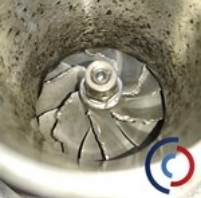
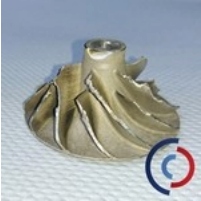
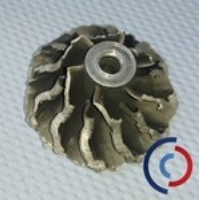
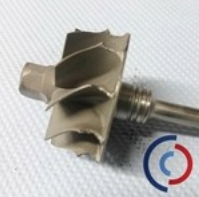
1. Damage by Foreign Material
Bent or chipped rotor or compressor wheel blades are damages caused by a foreign object that entered the suction or exhaust housing.
Possible causes:
- nuts/bolts/stones/sand/hard element left in the air boost system,
- broken engine components,
- late air filter replacements,
- cracked connection elements or other objects that entered the device's interior.
Check the air intake channel and the exhaust manifold for foreign objects. Find and remove the cause of the damage. Check and clean the intake and exhaust systems. Replace the air filter element.
2. LACK OF OIL PRESSURE (LACK OF LUBRICATION)
Prolonged lack of oil pressure burns and damages the surface of the turbocharger bearings and rotor. It also causes thermal discoloration of these components.
Possible causes:
- damaged oil pump,
- clogged, broken, or bent line lubricating the turbocharger,
- low oil level in the oil sump,
- malfunctioning lubrication system,
- long vehicle driving at a steep angle of inclination.
Check/replace the oil pump along with the overflow valve. Check the lubrication system together with the line responsible for lubricating the turbocharger. Clean and check the condition of the oil sump - replace with a new one in case of dents.
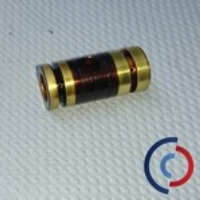
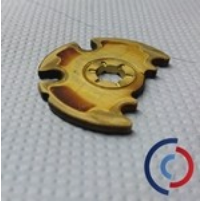
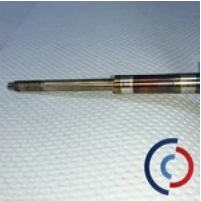
3. INTERRUPTIONS IN OIL SUPPLY
Repeated short interruptions of 4-5 seconds can lead to burning and polishing of the bearing surfaces.
Possible causes:
- consequence of incorrect oil and oil filter replacement (dry start of the turbocharger),
- turbocharger replacement without priming it with oil,
- the car has not been used for a long time,
- low oil pressure caused by a malfunctioning lubrication system,
- incorrect engine start-up after replacing or regenerating the turbocharger,
- oil contamination (e.g., fuel or glycol).
Check/replace the oil pump. Check the lubrication system together with the line responsible for lubricating the turbocharger. To avoid damage after a long period of not using the vehicle, start the engine for a few seconds, turn it off, and repeat the action several times to fully prime the lines and the turbocharger itself with oil and bleed them.
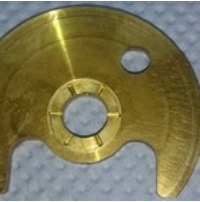
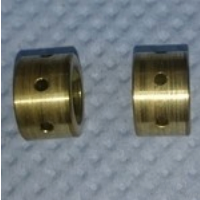
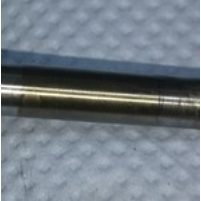
4. CONTAMINATED OIL
Dirty oil causes deep scratches on the turbocharger bearings.
Possible causes:
- blocked, damaged, or low-quality oil filter,
- engine wear and the possibility of damaged parts appearing,
- malfunctioning oil filter overflow valve,
- low-quality engine oil,
- engine oil that has not been replaced for too long.
This type of damage can be avoided by using and regularly replacing high-quality oils and filters. Remember to replace them regularly in accordance with the manufacturer's recommendations or even more often!
5. VARIABLE GEOMETRY MECHANISM DAMAGE
Seized or burnt variable geometry vanes are a common reason for turbocharger over-boosting or under-boosting. Oil carbon build-up on the variable geometry can cause the car to enter emergency mode and experience a significant drop in power.
Possible causes:
- damaged/malfunctioning particulate filter, so-called DPF/FAP or catalytic converter,
- damaged injectors,
- excess oil from a leaky cylinder head, valve stem seals, or sealing rings,
- malfunctioning actuator or turbocharger controller,
- notorious short-distance driving at slow speeds.
The cause of the damage should be correctly diagnosed and repaired. In 99% of cases, it will be one of the above reasons. To avoid failure of the variable geometry mechanism, we advise controlling: the particulate filter, injectors, and oil pressure. We recommend regular longer drives, during which the mechanism has a chance to heat up and get rid of carbon deposits.
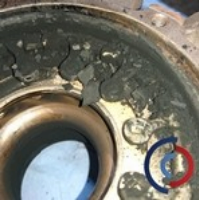
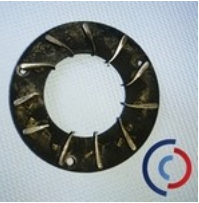
6. Overheating
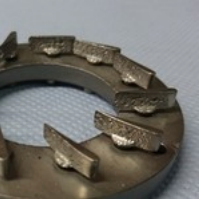
Higher temperature passing from the turbocharger's exhaust housing to the core housing contributes to oil burn-off and causes corrosion of the component's bearings. Too high exhaust gas temperature or turning off the engine too quickly after intensive operation causes the accumulation of carbon resulting from the burning oil. The parts most susceptible to damage are primarily the rotor sealing ring along with its location (turbine shaft groove) and the turbo bearing. Carbonised oil also blocks the oil drain, and its accumulation causes friction, which consequently leads to bending or cracking of individual parts of the device. Overheating can also lead to engine self-ignition.
Possible causes:
- poor-quality engine oil,
- turning off the engine too quickly after intensive operation,
- blocked or worn air filter,
- air and exhaust gas blow-by,
- infrequently changed engine oil,
- damaged or malfunctioning injectors,
- faulty lubrication system,
- faulty oil drainage system (incorrect engine crankcase ventilation).
7. Oil from the Intake System
Engine oil that enters the turbocharger from the suction system side most often leads to the accumulation of oil scale at the turbocharger rotor seal. The accumulated burnt oil causes wear of the bearing and the rotor groove (location of the rotor sealing ring), which consequently leads to the 'blowing out' of this ring.
Intake system - the lungs of the engine
The intake system is responsible for supplying air to the engine (in units with direct fuel injection) or a fuel-air mixture (in engines with indirect injection). Real problems arise when engine oil starts to accumulate in the intake system. Under no circumstances should it be there!
Malfunctioning breather system (oil separator)
The reason for oil remaining in the intake, very often neglected even by mechanics, is a poorly functioning breather system. The task of the breather system is to ventilate the crankcase. Along with the air that is drawn from the crankcase, engine oil (small amounts) is also sucked in. The problem is that after several years of operation, the oil separator located in the breather system stops working correctly and allows air along with oil vapours to pass into the turbocharger intake duct. As a result, the compressor pushes air along with oil into the intercooler duct.
WORN PISTON RINGS / ENGINE BLOW-BY
The presence of oil in the intake system can also be the result of worn piston rings, which results in oil being blown into the intake system. If the car engine actually requires replacement of the rings, it is worth checking its other components (cylinder head). It may turn out that shortly after replacing the rings, the engine will have to be disassembled again to eliminate another fault.
TOO MUCH OIL IN THE ENGINE
Another reason for oil getting into the intake system may be too much oil in the engine. Service centres very often overfill the engine with oil, most often due to the short time they can devote to the vehicle. Before the oil drains completely from the engine, they fill it with the amount of oil recommended by the manufacturer. This is when the risk of oil appearing in the breather system, which will deliver it to the intake system, sharply increases.